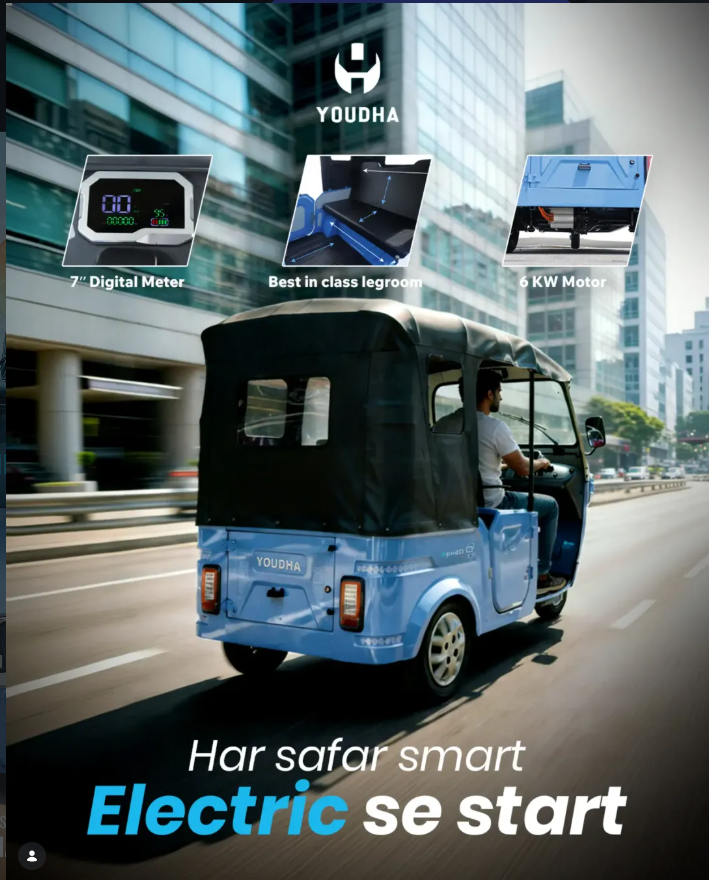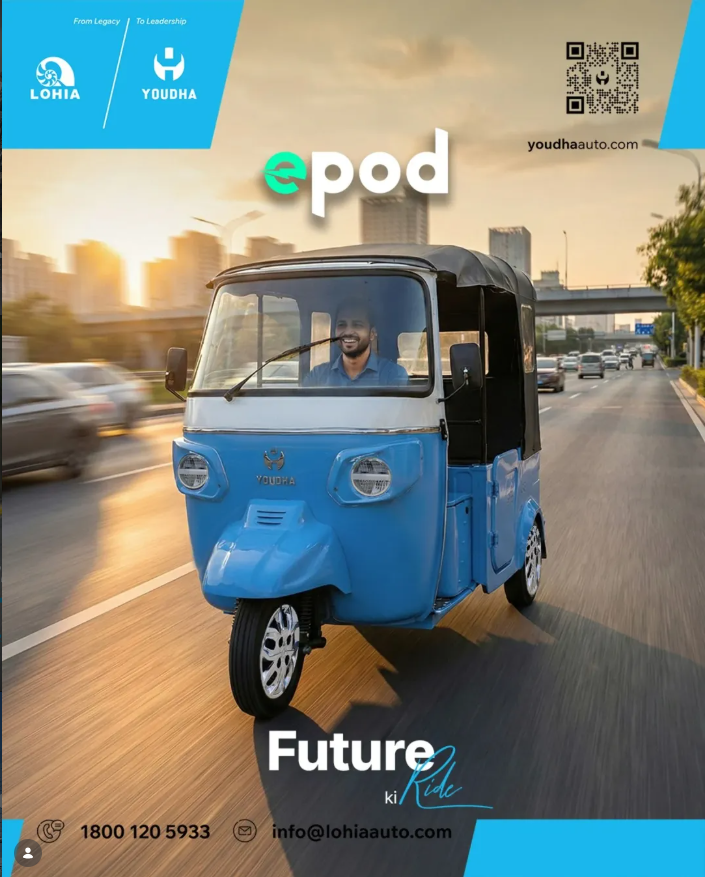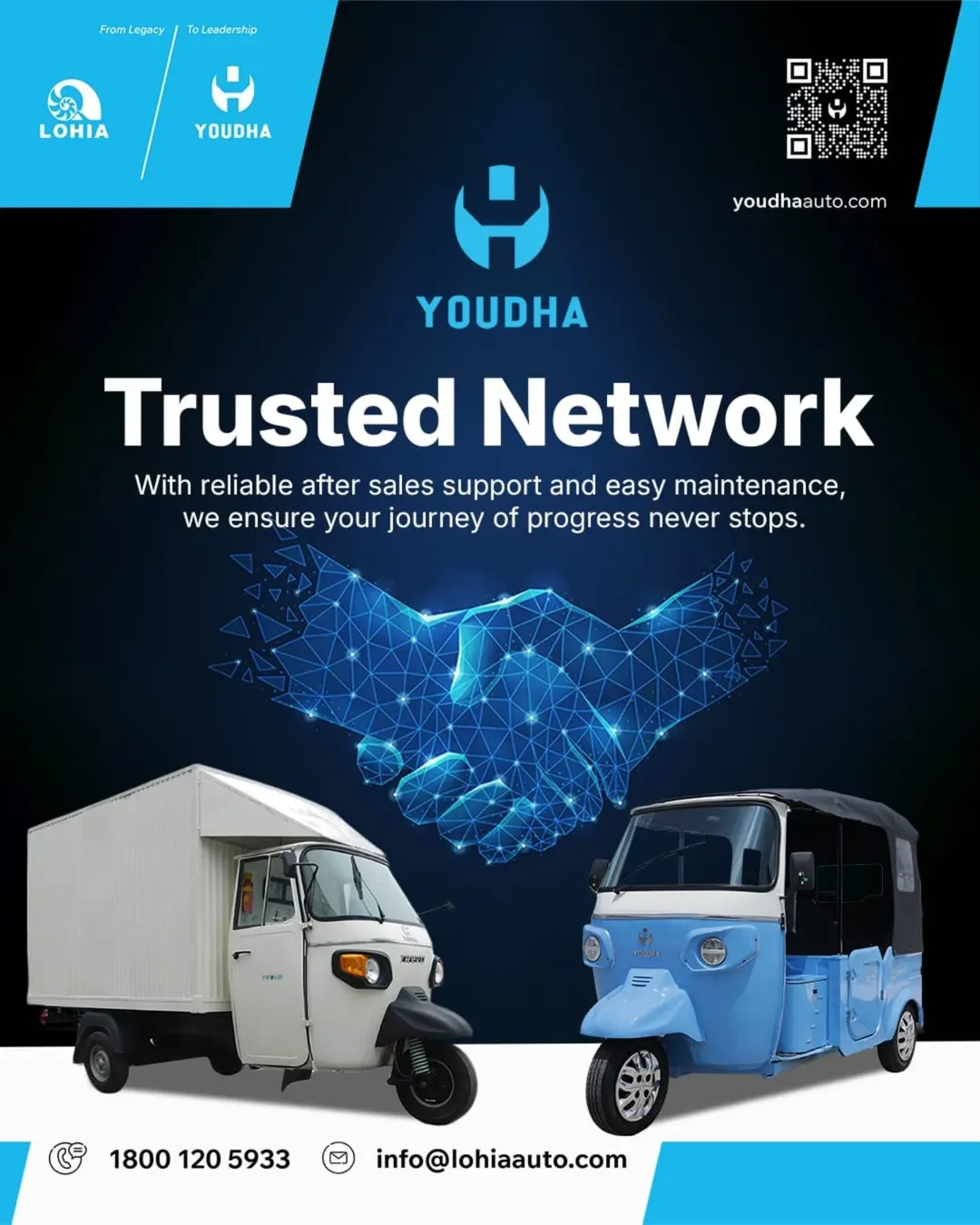
Electric 3-wheelers reduce fleet operating costs by 40–60% compared to diesel counterparts, while improving last-mile delivery efficiency and cutting emissions. Fleet owners gain lower maintenance, government incentives, and future-proof compliance—without sacrificing payload or range. The shift isn’t just sustainable; it’s financially smarter.
Fleet managers don’t have the luxury of chasing trends. Every decision—from vehicle selection to route planning—must balance cost, reliability, and scalability. Yet in the past 18 months, a quiet shift has accelerated: electric 3-wheelers are no longer a niche experiment but a mainstream solution for last-mile logistics. According to a 2026 market analysis by Scroll.in, over 60% of India’s urban delivery fleets now include electric 3-wheelers in their rotation, up from just 22% in 2023. The reason? The math no longer adds up in favor of diesel.
This isn’t about environmental virtue signaling. It’s about cold, hard economics—and the fleets that adapt first are pulling ahead. Youdha has worked with hundreds of fleet operators across India, and the pattern is clear: those who delay the switch aren’t just missing savings; they’re ceding ground to competitors who’ve already optimized their operations around electric mobility.
Here’s what fleet owners need to know about the real benefits—and why the window to act is narrowing.
How Much Can Fleet Owners Actually Save on Operating Costs?
The most immediate advantage of electric 3-wheelers is their lower cost per kilometer. Diesel prices have fluctuated wildly in recent years, often exceeding ₹90 per liter in major cities. Electricity, by contrast, costs ₹6–8 per unit (kWh), and a typical 3-wheeler consumes about 0.15 kWh per km. That translates to a fuel cost of roughly ₹1.20 per km—versus ₹3.50–4.50 for diesel.
But the savings don’t stop at fuel. Electric motors have fewer moving parts than internal combustion engines, which means fewer breakdowns and lower maintenance. A study by YourStory found that fleets switching to electric 3-wheelers reduced maintenance costs by 30–50% in the first year alone. No oil changes. No clutch replacements. No exhaust system repairs. For a fleet of 50 vehicles, that’s a six-figure annual saving—money that can be reinvested in scaling operations or improving driver incentives.
Are Electric 3-Wheelers Reliable Enough for Daily Fleet Use?
Reliability is the make-or-break factor for fleet owners. A single breakdown can disrupt an entire day’s deliveries, erode customer trust, and trigger penalty clauses in contracts. Early skepticism about electric 3-wheelers often centered on battery life and charging infrastructure, but the technology has matured rapidly.
Modern electric 3-wheelers now offer ranges of 120–150 km on a single charge—enough for a full day’s urban deliveries. Fast-charging options (0–80% in 45–60 minutes) mean vehicles can top up during driver breaks, eliminating downtime. Youdha’s fleet partners, for instance, report uptime rates of 98% or higher, with most issues resolved via over-the-air software updates rather than physical repairs.
The key is choosing vehicles designed for commercial use. Consumer-grade electric scooters won’t cut it; fleet operators need purpose-built 3-wheelers with reinforced chassis, high-capacity batteries, and telematics for real-time monitoring. When spec’d correctly, these vehicles outperform their diesel counterparts in stop-and-go traffic, where electric motors excel in efficiency and torque.
What Incentives Are Available for Fleet Electrification?
Government policies have evolved from vague commitments to concrete financial incentives. Under the FAME-II scheme (extended through 2027), fleet owners can claim subsidies of up to ₹50,000 per electric 3-wheeler. Several states offer additional benefits: Delhi waives road tax and registration fees, while Maharashtra provides interest subsidies on loans for electric vehicles.
But the real game-changer is the Goods and Services Tax (GST) reduction. Electric 3-wheelers are taxed at 5%, compared to 28% for diesel counterparts. For a fleet purchasing 100 vehicles, that’s a saving of ₹1.5–2 crore on upfront costs alone. These incentives aren’t just for show; they’re designed to accelerate the transition, and fleets that move early lock in the best terms.
How Do Electric 3-Wheelers Improve Last-Mile Delivery Efficiency?
Last-mile delivery is the most expensive and logistically complex part of the supply chain, often accounting for 53% of total shipping costs (BoomLive, 2025). Electric 3-wheelers address this in three ways:
- Maneuverability: Their compact size allows them to navigate narrow lanes, congested markets, and restricted zones where larger vehicles can’t go. This reduces the need for transshipment hubs and cuts delivery times by 15–20% in dense urban areas.
- Lower Operating Noise: Electric motors operate at 50–60 decibels—quieter than a normal conversation. This enables early-morning or late-night deliveries in residential areas, expanding service windows without violating noise regulations.
- Data Integration: Modern electric 3-wheelers come equipped with telematics that track speed, route efficiency, and battery health. Fleet managers can use this data to optimize routes, reduce idle time, and predict maintenance needs before they become problems.
For e-commerce and hyperlocal delivery fleets, these advantages translate directly into faster turnaround times and higher customer satisfaction scores.
What’s the Environmental Impact—and Why Does It Matter for Fleets?
Carbon emissions might not be the first concern for fleet owners, but they’re increasingly becoming a business imperative. Cities like Mumbai and Bengaluru are rolling out low-emission zones (LEZs), where diesel vehicles face restrictions or additional fees. By 2028, 12 Indian cities are expected to implement LEZs, according to Times of India.
Electric 3-wheelers produce zero tailpipe emissions, which not only helps fleets comply with current regulations but also future-proofs them against stricter policies. Beyond compliance, there’s a growing consumer preference for sustainable brands. A 2026 survey by Medianama found that 68% of urban consumers are more likely to choose a delivery service that uses electric vehicles. For fleets, this isn’t just about avoiding fines—it’s about staying relevant in a market where sustainability is becoming a competitive differentiator.
Key Facts Worth Knowing
- 40% lower cost per km: Electric 3-wheelers cost ₹1.20/km to run, vs. ₹3.50–4.50 for diesel (YourStory, 2025).
- 98% uptime: Fleets using commercial-grade electric 3-wheelers report near-perfect reliability (Scroll.in, 2026).
- ₹50,000 subsidy: FAME-II offers up to ₹50,000 per vehicle, with state-level incentives stacking on top.
- 120–150 km range: Modern batteries support a full day’s deliveries on a single charge.
- 5% GST: Electric 3-wheelers are taxed at 5%, vs. 28% for diesel counterparts.
People Also Ask
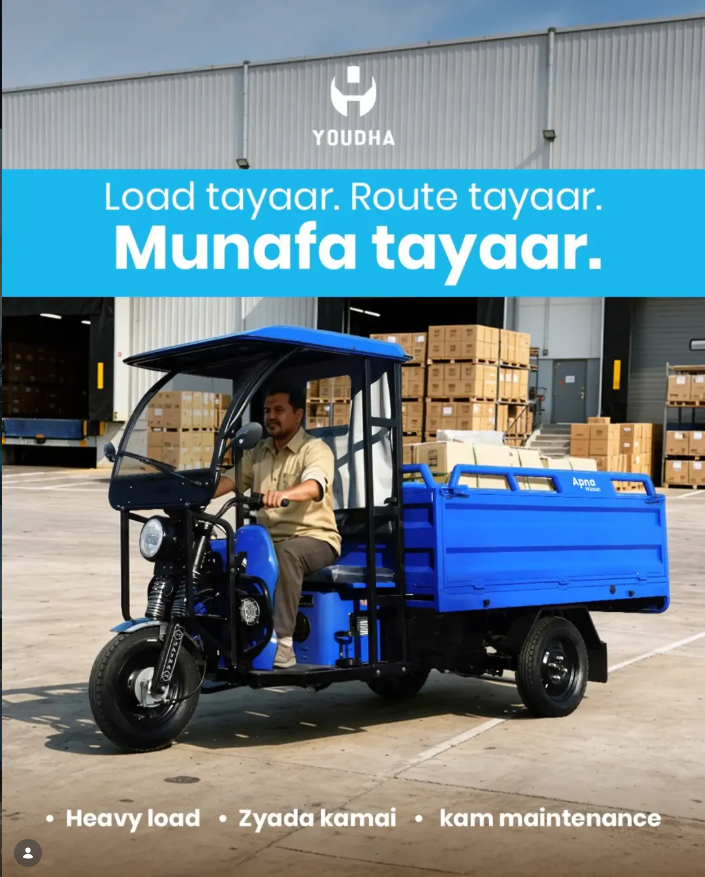
Can electric 3-wheelers handle heavy payloads? Yes. Commercial-grade electric 3-wheelers are designed to carry payloads of 500–800 kg—comparable to diesel counterparts. Some models, like those used in Youdha’s fleet programs, even exceed this capacity with reinforced suspension and battery systems optimized for load-bearing.
How long does it take to charge an electric 3-wheeler? Standard charging (0–100%) takes 4–6 hours, but fast-charging options can reach 80% in 45–60 minutes. Most fleets use a mix of overnight charging and mid-day top-ups to keep vehicles operational without downtime.
What happens if the battery degrades? Battery degradation is minimal in modern electric 3-wheelers, with most retaining 80% capacity after 5–7 years of daily use. Fleet operators can also lease batteries or opt for battery-swapping models to mitigate long-term costs.
Why This Matters Right Now
The economics of fleet electrification have reached an inflection point. Diesel prices are volatile, regulations are tightening, and consumer expectations are shifting. But the biggest risk isn’t the cost of switching—it’s the cost of inaction.
Fleets that delay the transition are locking themselves into higher operating costs, regulatory exposure, and a shrinking pool of delivery opportunities. Meanwhile, early adopters are already reaping the benefits: lower expenses, happier drivers (thanks to smoother rides and fewer breakdowns), and a stronger brand reputation.
The question isn’t whether to switch—it’s how fast you can scale the transition.
Final Thoughts
Electric 3-wheelers aren’t a futuristic concept. They’re a present-day tool for fleet owners who want to cut costs, improve efficiency, and stay ahead of regulatory curves. The savings are real, the technology is proven, and the incentives are in place. The only missing piece is action.
For fleets ready to make the shift, the key is partnering with providers who understand the unique demands of commercial operations—not just selling vehicles, but designing solutions that integrate seamlessly into existing workflows. The future of last-mile delivery isn’t just electric; it’s already here.
Explore more at Youdha.