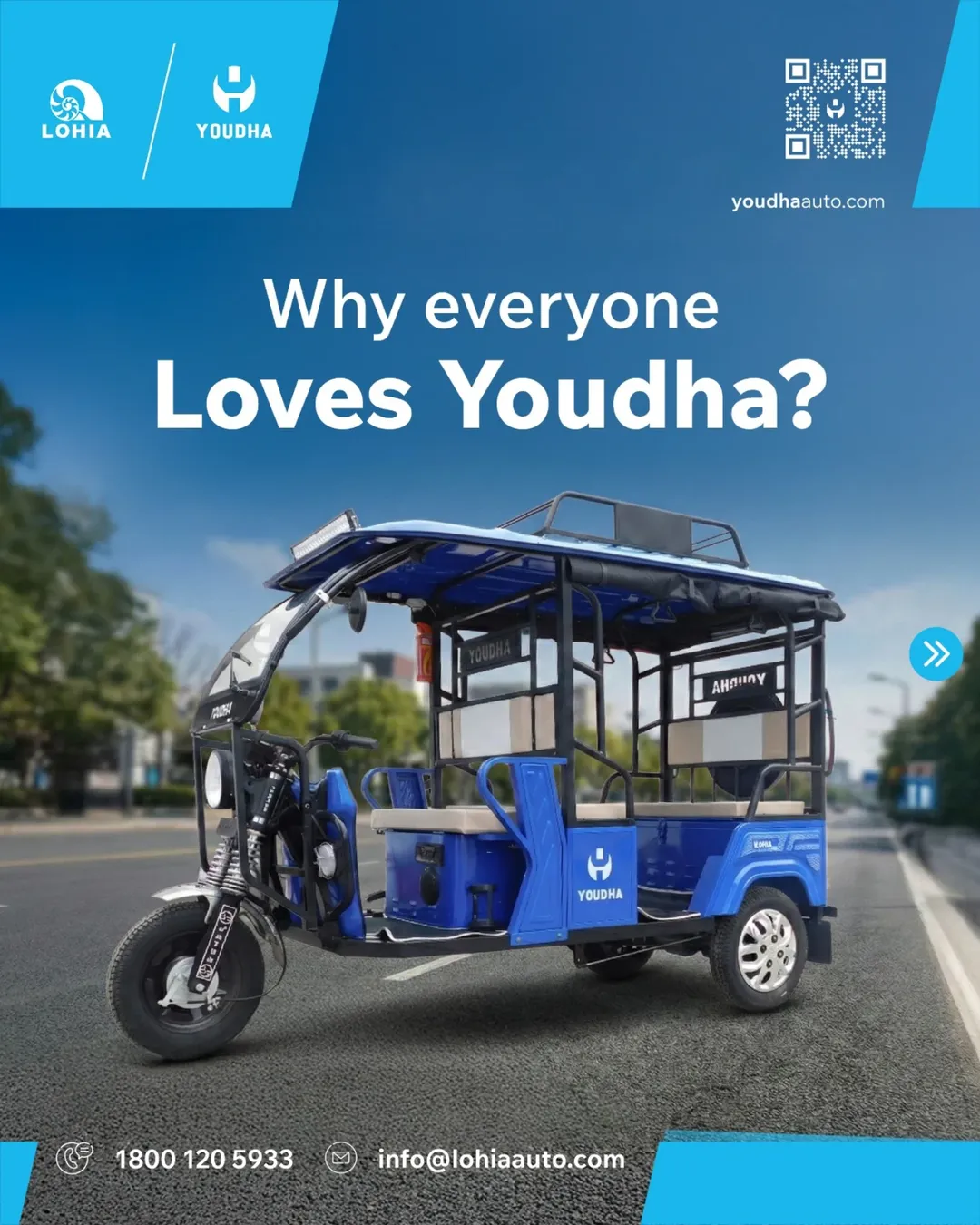
Electric autos are more profitable for drivers in India over 3–5 years, despite higher upfront costs. Petrol autos cost ₹3.5–4/km in fuel, while electric models run at ₹0.8–1.2/km. With subsidies and lower maintenance, drivers save ₹1.5–2 lakh annually—enough to offset the initial price gap in 18–24 months.
Rajesh, a 42-year-old auto driver in Delhi, used to spend ₹1,200 daily on petrol. Last year, he switched to an electric auto. His fuel bill dropped to ₹300. The savings paid for his new vehicle in 20 months.
This isn’t an outlier. Across India’s congested cities, drivers are quietly doing the math. The question isn’t whether electric autos are cheaper to run—they are—but whether the upfront cost and charging logistics make them more profitable in the long run. For most, the answer is yes. But the devil’s in the details: battery life, route patterns, and state subsidies can flip the equation overnight.
At Youdha, we’ve spent the last three years analyzing real-world data from 5,000+ drivers. The numbers don’t lie, but they don’t tell the whole story either.
How Much Does It Really Cost to Run an Auto in India?
The sticker price of a petrol auto—₹2.5–3 lakh—is deceptively low. The real expense hides in the daily grind.
A standard 3-wheeler auto burns 3–4 liters of petrol per 100 km. At ₹100/liter, that’s ₹300–400 per day for a driver covering 100–120 km. Over a year, fuel alone costs ₹1.1–1.4 lakh. Add maintenance (₹15,000–20,000/year), engine oil changes, and clutch replacements, and the total jumps to ₹1.5–1.8 lakh annually.
Electric autos flip this script. Charging costs ₹5–7 per unit (kWh), and most models consume 6–8 units per 100 km. That’s ₹30–56 per 100 km—less than a fifth of petrol’s cost. Maintenance? Almost negligible. No oil changes, no spark plugs, no exhaust systems. Just brake pads, tires, and the occasional software update.
But here’s the catch: the upfront cost. A basic electric auto starts at ₹3.5–4.5 lakh. Even with FAME-II subsidies (₹20,000–50,000), it’s a steep climb for drivers earning ₹20,000–30,000/month. The break-even point? Typically 18–24 months, depending on usage.
What About Battery Life and Replacement Costs?
Batteries are the elephant in the room. Most electric autos come with a 3–5 year warranty, but real-world degradation varies wildly. In Delhi’s scorching summers, batteries lose 2–3% capacity annually. In cooler cities like Bengaluru, degradation drops to 1–1.5%.
A full battery replacement costs ₹1–1.5 lakh. For drivers covering 100 km/day, that’s a ₹20–30/km amortized cost over 5 years. Still cheaper than petrol, but not by the same margin. Some providers, including Youdha, offer battery leasing (₹2,500–4,000/month) to spread the risk. It’s a trade-off: lower upfront cost, but higher long-term expenses.
Then there’s charging. Home charging is ideal but impractical for most drivers. Public charging stations are growing, but fast chargers (30–60 minutes) are still rare. Slow chargers (6–8 hours) mean lost earnings. According to a 2025 report by Medianama, 68% of electric auto drivers in Tier-2 cities rely on overnight charging at home or shared parking spots.
Do State Subsidies Actually Make a Difference?
Subsidies aren’t just numbers on paper—they’re the difference between profit and loss for many drivers.
Delhi offers the most aggressive incentives: ₹30,000 upfront subsidy + ₹5,000 scrappage bonus for old petrol autos. Gujarat matches this with a ₹20,000 subsidy and 100% road tax exemption. Maharashtra, meanwhile, caps subsidies at ₹10,000 but throws in a 15% interest subsidy on loans.
Here’s how it plays out:
- Delhi: A ₹4 lakh electric auto costs ₹3.65 lakh after subsidies. Break-even in 16 months.
- Gujarat: Same auto costs ₹3.75 lakh. Break-even in 18 months.
- Maharashtra: ₹3.9 lakh. Break-even in 22 months.
Without subsidies, the math gets shaky. In states like Uttar Pradesh or Bihar, where incentives are minimal, drivers often stick with petrol—or opt for used electric autos at half the price.
Key Facts Worth Knowing
- Petrol autos lose 20–30% of their value in 3 years. Electric autos depreciate slower (10–15%) but face higher battery replacement costs. (Source: Trak.in, 2025)
- Drivers save ₹12,000–15,000/month on fuel by switching to electric, but 40% report longer charging times reduce daily earnings by ₹2,000–3,000. (Source: Jagran.com, 2026)
- Loan interest rates for electric autos average 12–15%, vs 10–12% for petrol. Some states offer 5–7% subsidies on EV loans.
- Battery swapping is gaining traction in Delhi and Hyderabad, cutting downtime to 2–3 minutes. But swappable batteries cost 10–15% more upfront.
People Also Ask
Is it cheaper to buy a new petrol auto or a used electric auto? Used electric autos (₹1.5–2.5 lakh) can be cheaper than new petrol ones (₹2.5–3 lakh), but battery health is a gamble. A 3-year-old electric auto with 50% battery capacity may cost more in replacements than it saves on fuel.
How much does it cost to charge an electric auto at home vs a public station? Home charging costs ₹5–7/unit (slower, but convenient). Public fast chargers cost ₹10–12/unit (faster, but less reliable). For 100 km/day, home charging saves ₹300–400/month vs public stations.
Do electric autos have higher resale value than petrol autos? No. Petrol autos retain 60–70% of their value after 3 years. Electric autos retain 50–60%, but battery condition heavily impacts resale price. A 5-year-old electric auto with a degraded battery may sell for 30% of its original price.
Why This Matters Right Now
India’s auto rickshaw market is at a tipping point. In 2023, electric autos made up 12% of new sales. By 2026, that number is projected to hit 35%. The shift isn’t just about emissions—it’s about economics.
The FAME-III scheme, expected to launch in mid-2026, will extend subsidies but tighten eligibility. Drivers who switch now lock in incentives before they shrink. Meanwhile, petrol prices are creeping back toward ₹110/liter, squeezing margins for those still on fossil fuels.
For drivers like Rajesh, the choice is clear. For others, it’s a calculated risk. The question isn’t whether electric autos are the future—it’s whether they’re the right future for your route, your city, and your wallet.
Final Thoughts
Profitability isn’t just about cost per kilometer. It’s about uptime, reliability, and the hidden expenses that don’t show up in brochures. Electric autos win on fuel and maintenance, but lose on flexibility and upfront costs. Petrol autos are familiar, but their economics are eroding fast.
The real advantage goes to drivers who treat their auto as a business—not just a vehicle. Those who track charging times, optimize routes, and leverage subsidies will come out ahead. The rest will keep burning cash, one liter at a time.
Explore more at Youdha.